

Upflow → Blog → B2B payments
Cash collection benchmarks & the power of online payments: Recap of our NYC rooftop event
Aashima Lamba
|
September 23, 2024
Generate AI summary


Bringing together insightful discussion and stunning New York City views, we recently hosted a one-of-a-kind event atop a picturesque Manhattan rooftop.
With the skyline as a backdrop, we brought together a panel of experts from diverse fields to delve into the intricacies of B2B payments and cash collection.
The panel featured:
- Guru Sivapalan, Senior Finance & Accounting Manager at Regal.io.
- Lauren Pearl, a fractional CFO and startup finance instructor at NYU.
- Matt Hennessy, Head of Growth, Saas Platforms at Stripe.
- Brad Cross, Chief Revenue Officer at Upflow.
- Côme Chevallier, Payments Director at Upflow.
The group discussed how businesses can optimize cash flow through the right payment methods, leveraging Upflow’s 2024 State of B2B Payments report as a foundation.
But that was only the tip of the iceberg – they went on to talk about how businesses can speed up their payment turnaround times, focusing on solutions like online payments and cards, while also addressing industry-specific risks in payment delays.
The discussion spanned from benchmark data on Days Sales Outstanding (DSO) to targeted collection strategies that optimize cash flow.
If you missed it, you can watch the full video replay by clicking here. Or continue scrolling down for a written recap of the three major insights from the event.

Our panel, featuring (from left to right): Guru Sivapalan (Senior Finance & Accounting Manager at Regal.io), Côme Chevallier (Payments Director at Upflow), Matt Hennessy (Head of Growth, Saas Platforms at Stripe), Brad Cross (Chief Revenue Officer at Upflow) and Lauren Pearl (Fractional CFO and startup finance instructor at NYU).
Insight #1: Some industries face a higher risk of non-payment
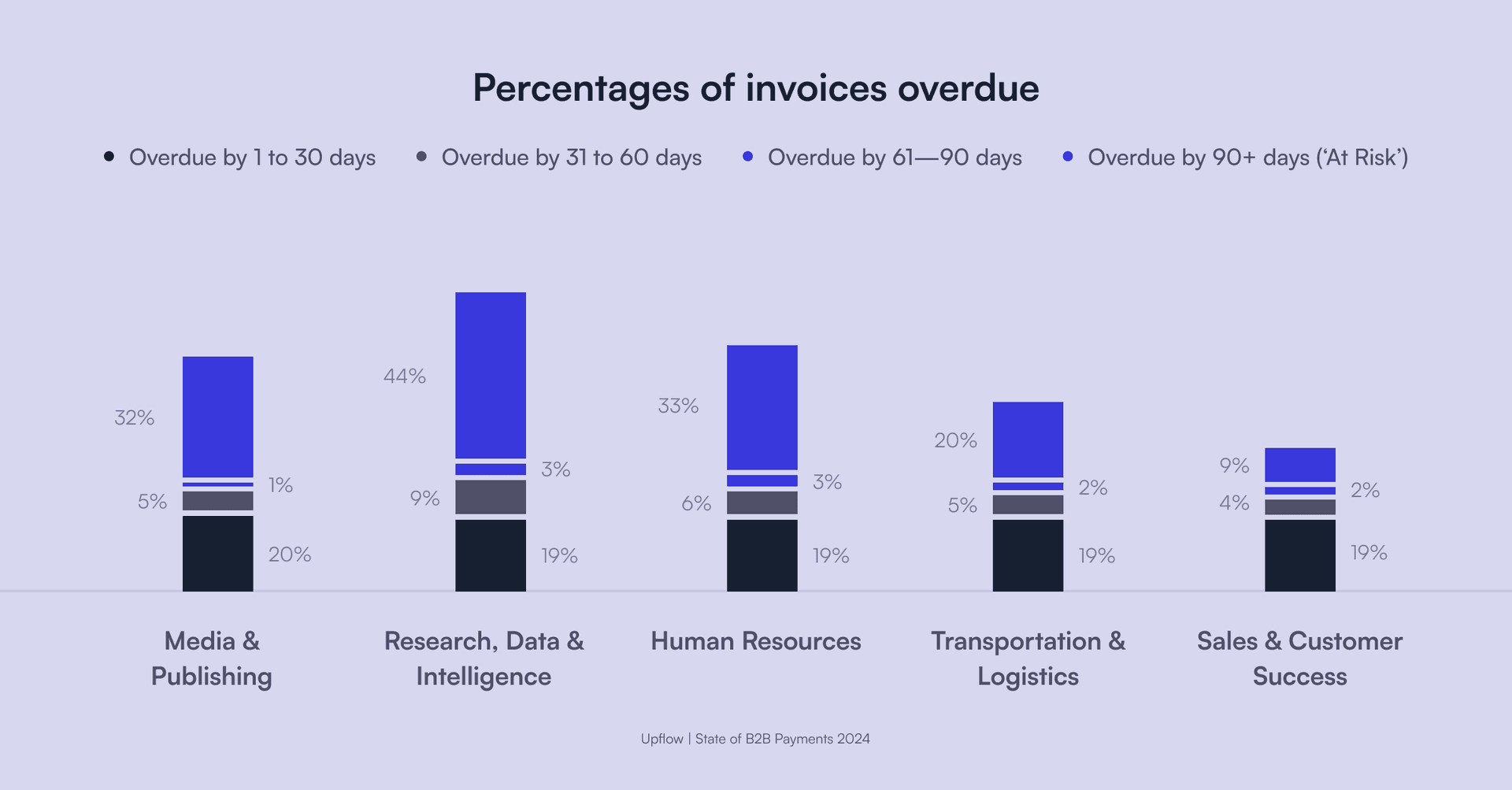
One of the standout topics of discussion was the significant risk of non-payment across certain industries, which is outlined in Upflow’s report.
As Brad Cross explained:
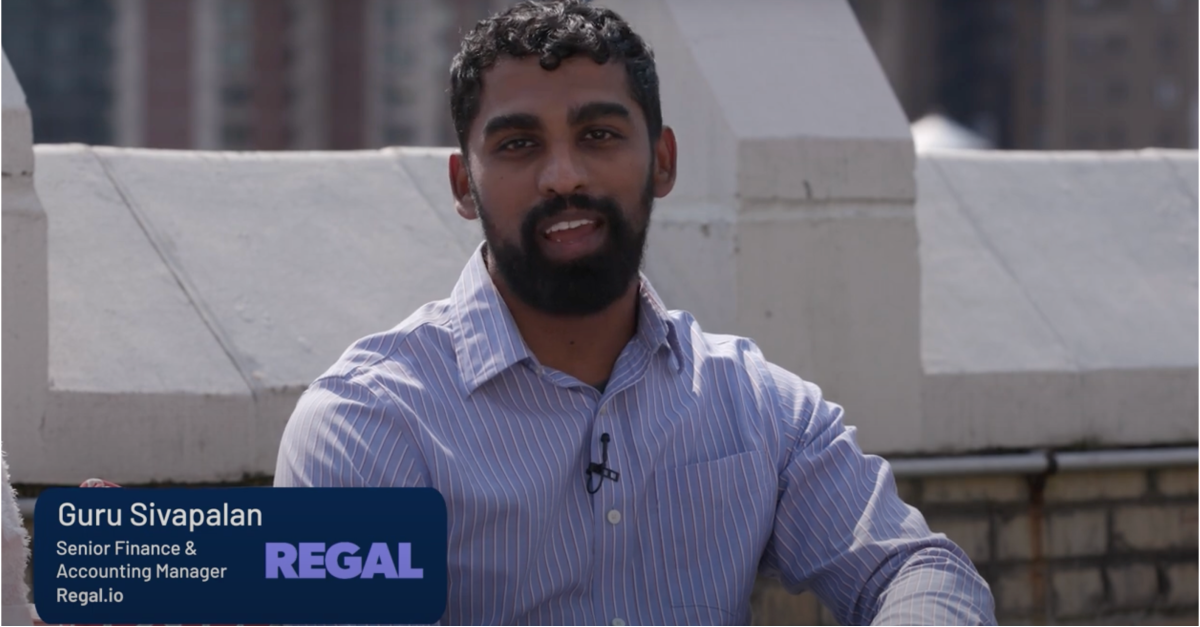
Asked whether this was a trend he had experienced, Guru Sivapalan, Senior Finance & Accounting Manager at Regal.io, noted that many times late payment can be a result of simple things like the invoice being sent to the wrong contact.
According to the data, late payment seems to be especially prevalent in industries such as Security and Compliance, where 60% of overdue invoices are in the 90+ days overdue bucket. Office & Facilities Management had an even higher risk, with 66% of late invoices in that 90+ day bucket.
Lauren Pearl, reflecting on her experience as a Fractional CFO working across several industries, noted:

In contrast, Sales & Customer Success industries experience much lower risk, with only 9% of their invoices being overdue beyond 90 days. This can be attributed to the fast-paced nature of these sectors and the value placed on maintaining ongoing services. The threat of having your CRM disconnected is enough for many organizations to take quick action on payment!
Strategies to combat non-payment and the risk of bad debt:
High-risk industries need to be proactive in their payment strategies. Here are three quick strategies to reduce the risk of non-payment :
- Stricter credit checks: Businesses should thoroughly assess clients' financial health before onboarding.
- Progress payments: For complex projects, requesting partial payments at various project stages can minimize the risk of non-payment.
- Proactive communication: A consistent follow-up strategy helps remind clients of upcoming deadlines and preempts excuses for non-payment. Even before that, taking the time to align clearly on payment terms at the time of signature can make a real difference.
Insight #2: Online payments have the power to significantly reduce payment delays
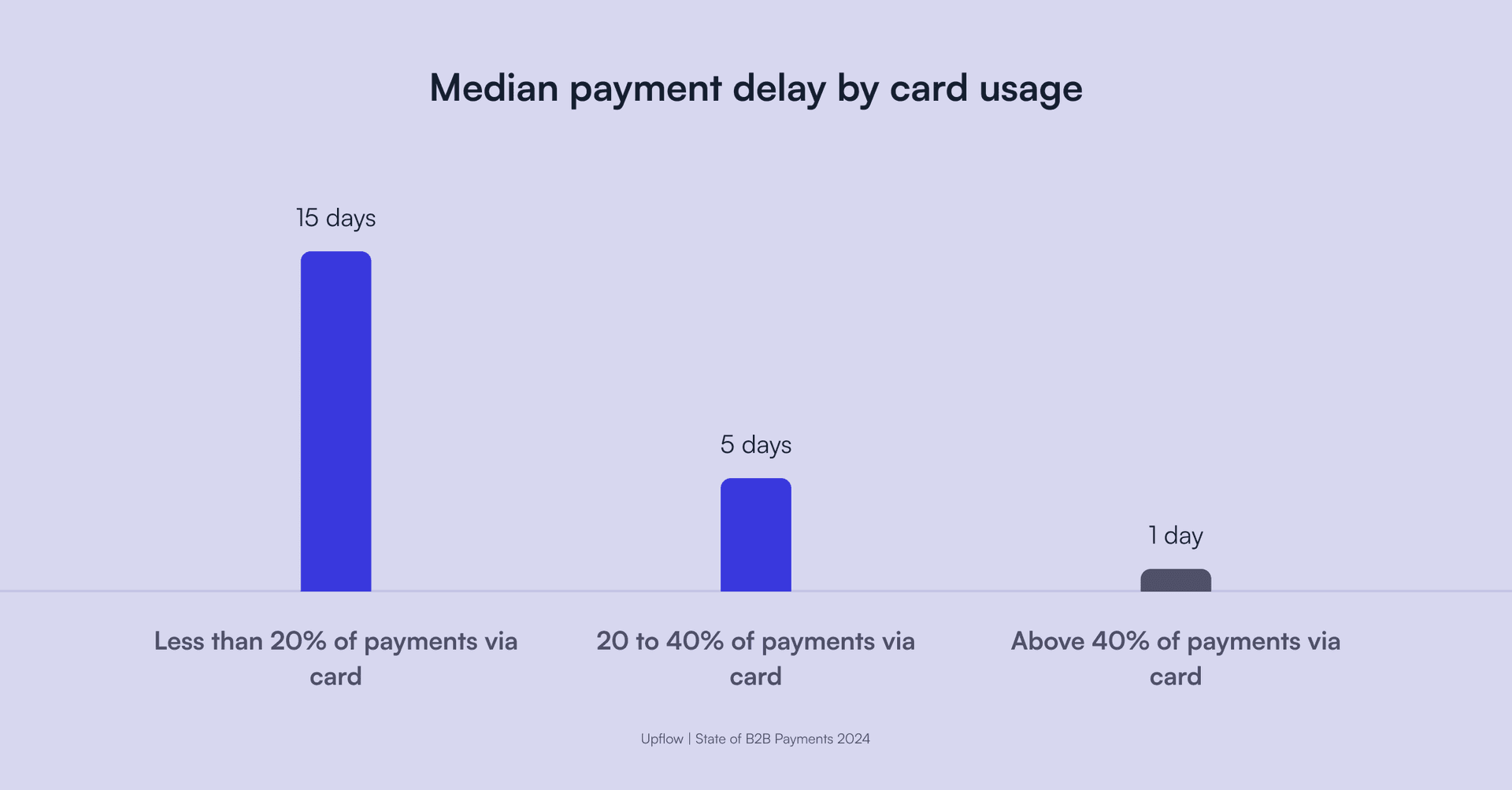
The panel agreed that online payments, particularly credit card payments, have proven to be a game-changer in reducing payment delays.
The data from our State of B2B Payments 2024 report shows that businesses that have a payment mix featuring over 40% payment by credit card saw a drastic drop in median payment delays—from 15 days (for companies using cards less frequently) to just 1 day.
Brad Cross highlighted the importance of this shift:
The panel discussed some widely-held misunderstandings when it comes to the use of credit cards in B2B, the first of which was ‘my customers won’t use a credit card for high-value transactions’.
In response to this, Matt Hennessy (Head of Growth, Saas Platforms at Stripe) noted:

Côme Chevallier, Payments Director at Upflow, added some color based on what we’ve seen in payment trends from our own customers:

On the customer side, rewards programs and other elements were noted but Matt Hennessy of Stripe boiled it down to this:
On the merchant side, over and above receiving payment faster, Lauren Pearl brought up a point around the ubiquity of company credit cards and virtual AP cards in many organizations:
Finally, the panelists noted that online payments are not only faster but also more secure. The automation of these payments ensures smoother reconciliation processes, freeing up valuable time for finance teams.
Insight #3: DSO benchmarks by industry
Another crucial topic of discussion was the variation in Days Sales Outstanding (DSO) across business models and industries.
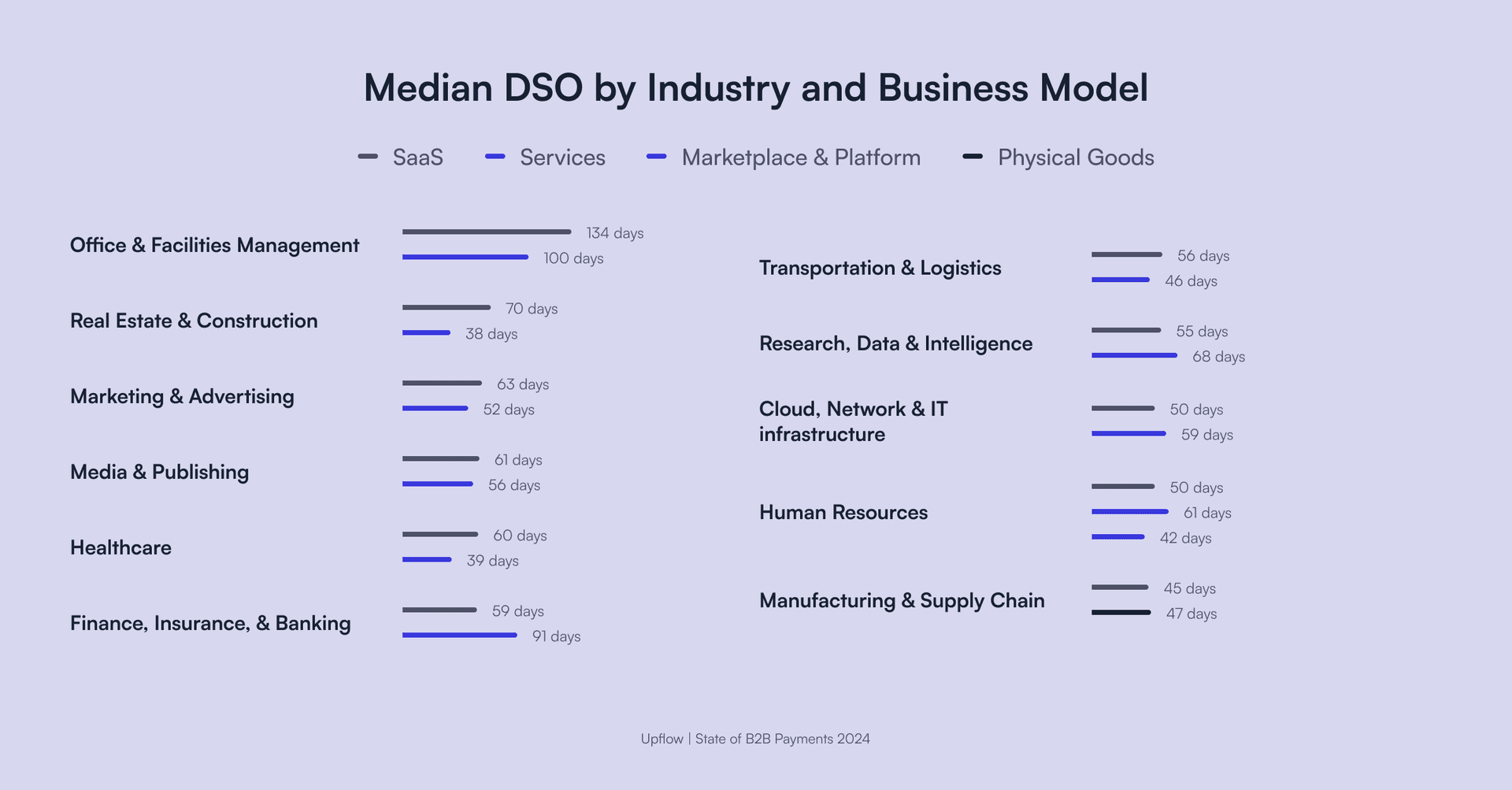
Focusing on business models first, our State of B2B Payments 2024 report outlined median DSO figures, showing that business selling physical goods and Software as a Service (SaaS) platforms fare better than those selling services:
- SaaS median DSO: Median of 59 days, with the top 25th percentile achieving 38 days. The subscription model's recurring billing cycles contribute to faster payments, along with autopay options.
- Physical Goods and Marketplaces median DSO: These businesses generally see faster payments, with a median DSO of 47 days. The need to restock inventory often incentivizes quicker payments to suppliers. In the case of marketplaces, like Malt, paying out to their supply side often means they put a major focus on receiving timely payment from the demand side of their business.
- Service-based industries median DSO: Service providers experience longer DSOs, with a median of 60 days, but for industries like consulting and insurance, DSOs can stretch beyond 80 days. Lauren Pearl pointed out, “In service industries, payment delays are often tied to subjective evaluations of whether a project has been satisfactorily completed. This leads to lengthy approval processes, which in turn delay payments.”
Focusing on industries, the panel shared interesting points about specific industries and factors that dictate their DSO.
Matt Hennessy of Stripe noted:

Lauren Pearl added insights from her experience in the retail industry:
Strategies to optimize DSO:
What can companies struggling with long DSOs do to get paid faster? Here are three quick thoughts the panel brought up in their discussion:
- Ensure clear, upfront invoicing and transparent payment terms.
- Offer autopay options or ‘pull’ payment models where funds are automatically withdrawn when due. This goes hand-in-hand with online payments. With a solution like Upflow, customers who trust the value you offer can set up to have their invoices paid automatically on their due dates.
- Maintain strong communication with clients to resolve any invoicing issues promptly.
Summing up
The insights shared during the event highlight one undeniable fact: industries must adapt to modern payment solutions if they want to optimize cash flow and reduce the risk of non-payment. Whether it’s leveraging online payment platforms or tailoring collection strategies based on industry benchmarks, businesses can no longer afford to rely on outdated payment models.
For those looking to benchmark their Days Sales Outstanding or further understand how to optimize payments, Upflow offers a free Discover tool, enabling companies to track their payment performance and compare it against industry standards.
Sign up now to gain insights and start improving your cash flow today!


Aashima Lamba
Marketing Director at Upflow
About the Author
Aashima Lamba is the Marketing Director at Upflow, where she leads the company’s global growth initiatives across digital, content, and campaign strategy. With a deep understanding of the SaaS buyer journey and full-funnel marketing, Aashima builds programs that attract, engage, and convert high-intent finance audiences.
At Upflow, she works closely with sales, product, and customer teams to ensure messaging resonates across every touchpoint, from thought leadership to revenue-driving campaigns. Her approach blends data-driven decision-making with creative storytelling to fuel brand awareness, pipeline generation, and customer retention.
With her deep understanding of finance audiences and unique perspective from collaborating across marketing, product, and sales, Aashima creates content that speaks directly to the challenges and goals of modern revenue teams. Her contributions to the Upflow blog turn industry insights into actionable messaging that resonates with finance leaders.
Related articles